Marine Antifouling Auckland: The Complete 2026 Hull Protection Guide

A single season of neglect in Auckland’s nutrient-rich waters can turn a high-performance hull into a drag-heavy liability that drains your fuel tank and risks a $100,000 fine. Managing boat antifouling auckland isn't just about aesthetics; it's a critical defensive strategy against the Hauraki Gulf's relentless biofouling. You likely already know that a fouled hull feels sluggish and looks unkempt, but the real damage happens beneath the waterline where drag increases and efficiency plummets.
It's frustrating to watch your vessel's performance drop whilst fuel costs climb, especially when choosing between different paint types feels like a technical minefield. We believe your time is better spent on the water than worrying about biosecurity compliance. This 2026 guide will help you master the essentials of hull preservation and show you how professional application saves you money at the pump. We'll break down the latest Auckland Council regulations, compare the best-performing coatings for our local environment, and outline a precision maintenance cycle that keeps your investment protected and your hull pristine.
Key Takeaways
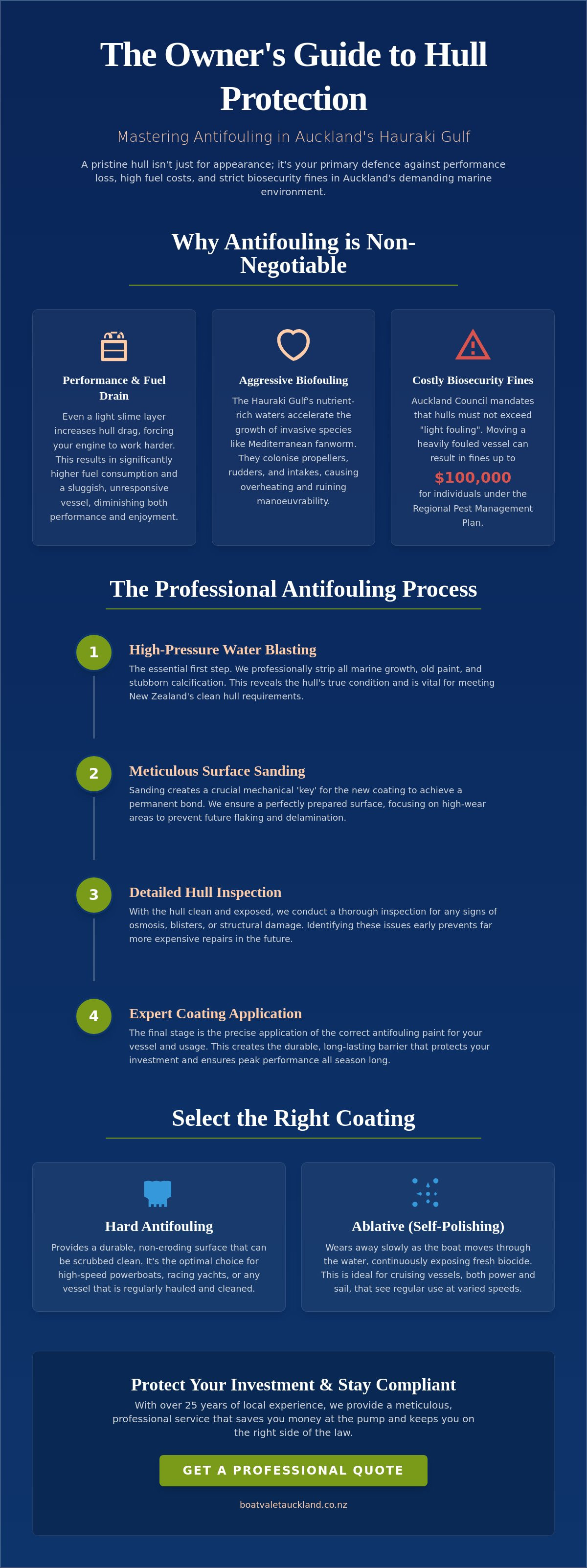
Understand why the Hauraki Gulf’s unique conditions demand specialised coatings to ensure compliance with Auckland’s strict biosecurity rules.
Learn why professional preparation and high-pressure water blasting are the essential foundations for long-term paint adhesion.
Discover how to select the right hard or ablative coating based on your vessel’s speed to optimise performance and fuel economy.
Master the ideal maintenance schedule for boat antifouling auckland to prevent costly calcification and preserve your hull’s integrity.
Explore how Steve Kellie’s 25 years of local industry experience simplifies the entire haul-out and application process for busy owners.
Table of Contents
Why Antifouling is Essential for Vessels in Auckland Waters
Auckland’s marine environment is one of the most productive in the world. It’s fantastic for fishing, but it’s a direct threat to your hull. Antifouling is a specialised protective coating designed to prevent marine organisms from attaching to your vessel. If you are new to boat ownership, you might wonder what is antifouling paint? At its core, it is a technical barrier that uses biocides or low-friction surfaces to stop growth before it takes hold. In the Hauraki Gulf, the combination of high nutrient levels and varying tidal flows makes boat antifouling auckland a non-negotiable part of your maintenance programme.
The primary enemy for most owners is drag. Even a light layer of slime creates friction, whilst barnacles act like brakes against the water. This drag forces your engine to burn more fuel to reach the same speeds, which directly impacts your wallet. In Auckland’s competitive marina environment, keeping a clean hull is the only way to ensure your vessel performs exactly as the manufacturer intended. Effective antifouling doesn't just keep the boat pretty; it preserves the mechanical integrity of your drivetrain by reducing unnecessary load.
The Biological Threat in the Hauraki Gulf
The Hauraki Gulf faces specific challenges amongst its many bays and inlets. Invasive species like the Mediterranean fanworm and clubbed sea squirt thrive in our local waters. These pests grow at an alarming rate, often colonising niche areas like bow thrusters, rudders, and intake grates. Auckland’s water temperature fluctuations create perfect windows for rapid growth cycles, often catching owners off guard between monthly washes. This heavy biofouling doesn't just slow you down. It ruins manoeuvrability and can cause engine overheating by blocking essential water intakes. A neglected hull quickly becomes a breeding ground that is difficult and expensive to remediate.
Compliance with Auckland Biosecurity Regulations
Auckland Council takes biosecurity seriously. Under the Regional Pest Management Plan (RPMP) 2020-2030, the rules are strict. Your hull must not exceed "light fouling," which is defined as a slime layer and just a few scattered barnacles. Marinas like Westhaven and the Viaduct frequently require proof of service or a clean hull certificate before allowing entry or long-term berthing. Maintaining a consistent what is boat antifouling schedule is the only way to stay compliant. If you’re caught moving a heavily fouled vessel into protected areas, you could face fines of up to $100,000 for individuals. Professional boat antifouling auckland ensures you stay on the right side of the law whilst protecting our precious local ecosystems for future generations.
The Professional Antifouling Process: From Preparation to Finish
Preparation is the foundation of every successful haul-out. If the hull surface isn't perfectly primed, even the most expensive paint will fail within months. Quality boat antifouling auckland services must always start with a clean slate. We begin the process with professional-grade water blasting to strip away the biofouling discussed in the previous section. This high-pressure wash removes stubborn calcification and ensures the hull is completely free of salt and organic residue. This step is vital for meeting New Zealand's clean hull requirements, as it exposes the true condition of the underlying paint layers.
Once the hull is dry, we move to mechanical sanding. This isn't just about removing old, flaking paint; it's about creating a physical "key" that allows the new coating to bond permanently. We pay close attention to the waterline and niche areas like thruster tunnels and rudders. Meticulous boat antifouling auckland relies on this attention to detail. If we find old layers are too thick or brittle, we may recommend a full strip-back to prevent future delamination. This ensures your vessel remains fast and efficient throughout the coming season.
Surface Preparation and Hull Inspection
A haul-out is the only time you get a clear look at your vessel’s health below the waterline. We inspect every square inch for signs of osmosis or hull blisters. Identifying these issues early prevents expensive structural repairs later. Whilst your boat is on the hard, it’s also the most efficient time to refresh the rest of the vessel. Many owners choose to combine their hull service with a boat cut and polish auckland to ensure the topsides match the quality of the new antifoul. We use specific techniques to protect your gelcoat during this phase, ensuring no abrasive dust ruins the finish.
Precision Application Techniques
Application is a science. We use precision masking to create a sharp, clean waterline that looks professional and prevents "creep." Depending on the vessel and the chosen product, we apply the coating using high-quality rollers or airless spraying. The goal is to achieve the exact Dry Film Thickness (DFT) specified by the manufacturer. If the paint is too thin, it won't last the season. If it's too thick, it may crack or shed prematurely. We also carefully manage curing times. Auckland’s humidity can be unpredictable, so we monitor conditions to ensure the paint sets perfectly before the boat returns to the water. If you want a result that stands up to the Hauraki Gulf, you can book a consultation with our team to discuss your specific hull requirements.
Choosing the Right Antifouling Paint for Your Vessel
Selecting the correct coating for boat antifouling auckland is just as vital as the preparation work we discussed earlier. The Hauraki Gulf is a demanding environment. Your choice must reflect your vessel’s top speed and how frequently you actually leave the marina. Hard antifouling creates a tough, durable finish that doesn't wear away. It is the preferred choice for high-speed launches and racing yachts because the surface can be burnished to a smooth, race-ready finish. Since it doesn't "self-polish," it can withstand regular underwater scrubbing without losing its protective thickness.
Hard vs. Ablative: Which Suits Your Usage?
Cruising vessels that spend more time at anchor or move at slower speeds often benefit from ablative, or self-polishing, coatings. These paints are engineered to wear away slowly as the boat moves through the water, constantly revealing a fresh layer of biocide. This prevents the heavy build-up of old paint layers over several seasons, which simplifies your long-term maintenance. If you only use your boat once or twice a month, an ablative paint ensures that even short trips help keep the hull clean by shedding any early growth.
Protecting Running Gear and Underwater Metals
Standard hull paint is designed for gelcoat or timber, not for the high-speed cavitation of a propeller. Applying it to running gear is a common mistake that leads to rapid paint failure and sluggish performance. For propellers, shafts, and rudders, we always recommend specialised foul-release coatings like Propspeed. These silicone-based products don't use biocides. Instead, they create a surface so slick that marine organisms simply cannot grip. This protection is essential for expensive bronze and stainless steel components. It prevents the pitting and corrosion that occurs when metals are left exposed to the salt water, ultimately saving you from costly replacements.
Environmental responsibility is now a core part of maritime maintenance in New Zealand. Local regulations have already restricted certain chemicals like diuron and ziram to protect our marine ecosystems. We are seeing a strong shift towards low-copper and biocide-free options that provide excellent protection without the heavy environmental footprint. Choosing these modern coatings helps future-proof your vessel whilst supporting the health of Auckland’s precious waterways. Expert boat antifouling auckland is about more than just paint; it's about selecting a system tailored specifically to your lifestyle and vessel usage.
Planning Your Maintenance: Costs, Frequency, and Timing
Timing is everything in the Hauraki Gulf. Most owners aim for a spring haul-out to ensure a clean hull for the summer cruising season, but winter can often provide better availability at Auckland yards. Planning for boat antifouling auckland requires a clear understanding of your vessel's specific needs. You must account for boat size, the current state of your hull, and the specific paint system chosen. A boat that hasn't been hauled in two years will require significantly more prep than one on a strict annual cycle. If you're looking for a breakdown of the variables that influence your budget, our guide on boat antifouling cost nz covers everything from yard fees to material choices.
Rising fuel prices make a clean hull more important than ever. Even a small amount of growth can increase fuel consumption by 10% or more. By coordinating your antifouling with a structured grooming programme, you protect your investment and keep your running costs manageable. It's about being proactive rather than reactive. Waiting until your boat feels sluggish often means the biofouling has already caused minor damage to your coating or running gear.
How Often Should You Antifoul?
Usage patterns dictate your schedule. High-mileage vessels that cruise the Hauraki Gulf weekly often stay cleaner because constant water movement prevents larvae from settling. "Marina queens" that sit idle for months face the opposite problem. You should look for signs like a sudden drop in top speed, increased vibration through the hull, or visible growth around the waterline. These are clear indicators that your current protection is failing. For a deeper dive into timing, check our guide on how often to antifoul boat.
Maximising Value from Your Haul-Out
Don't waste the haul-out by only focusing on paint. This is your window to replace zinc anodes and check skin fittings. It's also the perfect time to integrate your hull work with a broader mobile boat grooming auckland plan. Polishing the topsides and stainless steel whilst the boat is on the hard prevents the "run-off" that can ruin fresh antifoul later. Professional marine detailing services nz ensure every aspect of the vessel is preserved. Avoid the false economy of cheap, low-grade paints. They might look good on day one, but they often fail within six months in Auckland’s aggressive marine environment. You can book your full vessel maintenance package today to ensure your boat is ready for the season.
Expert Mobile Marine Care: Why Auckland Owners Trust Boat Valet Auckland
Choosing a partner for boat antifouling auckland shouldn't be a gamble. Whilst fixed-location shipyards provide the necessary infrastructure, they often lack the personal oversight required for a truly bespoke finish. Boat Valet Auckland operates on a mobile model that brings high-end specialist expertise directly to your preferred Auckland haul-out facility. This flexibility allows us to manage the entire process on your behalf; ensuring that the technical standards we’ve discussed, from high-pressure water blasting to precision masking, are met without compromise.
Steve Kellie brings over 25 years of hands-on Auckland experience to every project. Since 1998, he has worked across every major marina in the region, from Westhaven to Gulf Harbour. This deep local tenure means we understand the specific fouling patterns of different Auckland berths. We don't just apply paint. We manage the lifecycle of your hull protection to ensure your vessel remains fast, efficient, and compliant with local biosecurity rules. Our commitment to using premium materials ensures your investment is protected against the Hauraki Gulf’s aggressive marine growth.
The Personal Touch: Steve Kellie and the Boat Valet Auckland Standard
Our business is built on an owner-operator model. You won't deal with a faceless corporate office or a revolving door of junior staff. When you book a service, you speak directly to Steve. This level of accountability ensures that the meticulous attention to detail required for high-value assets is never diluted. We maintain the same high standards for boat antifouling auckland that we do for our interior valets and stainless steel polishing. It is about pride in the final result and the confidence that your boat is in safe hands. At Boat Valet Auckland, we treat every vessel as if it were our own.
Seamless Maintenance for Modern Boat Owners
Modern boat ownership should be about enjoyment, not managing a complex schedule of contractors. We take the stress out of the equation by organising and managing the entire maintenance cycle for you. We proactively schedule your haul-outs to avoid the spring rush, ensuring your boat is ready when the weather breaks. If you are preparing to move your vessel on, our pre-sale boat grooming nz services combine perfectly with fresh antifouling to maximise resale value. A clean hull and mirror-finish topsides are the two biggest factors in a successful survey. Contact Steve today for an expert assessment of your hull protection needs and let’s get your vessel back to its best.
Protect Your Investment and Maximise Performance
A well-maintained hull is the difference between a sluggish, expensive season and a fast, efficient summer in the Hauraki Gulf. By prioritising meticulous preparation and selecting the correct coating for your vessel’s speed, you ensure long-term protection against aggressive marine growth. Effective boat antifouling auckland doesn't just keep you compliant with local biosecurity rules; it directly reduces your fuel consumption and preserves your vessel's resale value. You've invested significantly in your lifestyle; don't let a fouled hull compromise your time on the water.
Steve Kellie has been a trusted partner for Auckland boat owners since 1998. As an owner-operator, he provides a high-end, mobile service that covers every major marina in the region. You get the benefit of over 25 years of local knowledge and a single point of contact for all your grooming needs. Don't leave your hull to chance this season. Book your expert Auckland antifouling consultation with Steve today and enjoy the peace of mind that comes with professional care. We look forward to getting your vessel back to its absolute best.
Frequently Asked Questions
How often should I antifoul my boat in Auckland?
Most boat owners in Auckland should antifoul their vessels every 12 months. The Hauraki Gulf’s warm, nutrient-dense water accelerates biofouling, making an annual haul-out the safest way to maintain speed and biosecurity compliance. If you use your boat heavily, you might stretch this to 18 months, but annual inspections are recommended to prevent invasive species from taking root in niche areas.
Can I apply new antifouling paint over the old coat?
You can apply new antifouling over an existing coat provided the old paint is compatible and securely bonded to the hull. We always perform a thorough pressure wash and mechanical sanding to create a "key" for the new layer. If the old paint is flaking or has become too thick over several seasons, it must be stripped back to the primer to ensure the new application doesn't delaminate.
What is the average cost of boat antifouling in New Zealand?
The total cost of boat antifouling auckland depends on your vessel's length, hull condition, and the specific paint system you choose. Yard fees for haul-out and hardstand time are separate from the professional labour and materials required for the application. A 35-foot launch with significant calcification will naturally require more preparation and product than a well-maintained yacht of the same size.
How long does a professional antifouling job take to complete?
A professional antifouling job typically takes between three to five days to complete. This timeframe includes the initial haul-out, high-pressure water blasting, mechanical sanding, and the application of multiple coats. We also factor in essential curing times between coats and before the boat returns to the water, which can vary based on Auckland’s local humidity levels and temperature.
Do I need different antifouling for a racing yacht versus a motor launch?
Racing yachts and high-speed launches generally require different types of coatings to optimise performance. Yachts often use hard antifouling that can be burnished to a mirror-smooth finish for minimal drag. In contrast, motor launches often benefit from ablative paints that "self-polish" as the boat moves, ensuring a fresh layer of biocide is always exposed to the water whilst the vessel is in use.
What is the best time of year to antifoul a boat in Auckland?
Spring is the most popular time for boat antifouling auckland as owners prepare for the summer cruising season. However, winter is often a strategic choice because Auckland boatyards are less crowded and scheduling is more flexible. Avoid days with high humidity or heavy rain, as these conditions can interfere with the paint’s ability to bond and cure correctly on the hardstand.
Is it possible to antifoul my own boat at an Auckland marina?
Most Auckland marinas allow DIY work only within designated, controlled hardstand areas that comply with local environmental regulations. You must use appropriate personal protective equipment and ensure all paint scrapings and wash water are collected for hazardous waste disposal. Many owners find that the technical requirements and equipment costs make professional application a more efficient and reliable choice for long-term protection.
Why is Propspeed recommended for my propellers and shafts?
Propspeed is recommended for propellers and shafts because standard antifouling paint cannot withstand the high-speed vibration and cavitation of running gear. It is a silicone-based foul-release coating that creates a surface too slick for marine organisms to grip. This keeps your running gear clean, improves fuel efficiency, and protects expensive metal components like bronze and stainless steel from the corrosive effects of salt water.
Comments