
Antifoul inspection service auckland

The time needed for an antifoul inspection service in Auckland depends on the hull’s condition and the preparation required. There is no single duration for every boat. A clear inspection establishes what the hull needs before work begins, so you can plan around the vessel rather than guess.
It’s reasonable to want a clear answer before arranging maintenance. The timeline depends on the hull’s condition, the coating system and the work involved, including any sanding or other preparation. This guide explains what affects the assessment, what a professional looks for and what details help plan the job. It also covers Auckland antifoul maintenance and when Boat Valet Auckland’s antifouling service may be the next step.
Table of Contents
Professional hull cleaning, sanding and surface preparation for an antifoul inspection
In Auckland and across New Zealand, requirements can depend on the antifouling product and where hull cleaning takes place. Establish the product instructions and site controls before work starts, as one paint system does not suit every vessel.
Begin with a close hull assessment. Note the coating’s condition, visible growth, bare patches and areas that need closer attention. Record specific signs, such as peeling around an edge or damaged paint near a fitting. This helps define the preparation required instead of sanding every surface by default.
Remove marine growth using a method suited to the hull and coating. A professional distinguishes loose growth from firmly attached paint. Cleaning exposes the surface for inspection and can reveal blistering, cracks or impact damage that growth might otherwise hide.
Keep the work location in mind. Before cleaning or sanding, establish controls for wash water, paint dust and removed debris. Requirements can vary by product and location. Follow the paint label and applicable site requirements rather than assuming every Auckland site follows the same procedure.
Prepare only the areas that need it. Sound, well-adhered coating may need different treatment from flaking or damaged paint. Sanding can smooth rough edges and prepare a surface for recoating, while removing too much coating can create unnecessary work and debris.
After preparation, inspect fittings, edges and transitions. Check around the keel, waterline and through-hull fittings for missed growth, exposed substrate or lifting paint. These checks help distinguish a preparation issue from damage that needs separate attention before coating proceeds.
Finish by documenting the prepared condition and any remaining concerns. Record where the coating is sound, where bare areas remain and whether hull repairs need attention. This gives the owner a practical basis for deciding what to do next, without treating an inspection as an automatic instruction to repaint the entire hull.
Requirements depend on the antifouling product and where cleaning takes place. Follow the paint label and applicable site requirements, and establish controls for wash water, paint dust and removed debris before cleaning or sanding.
Do Auckland antifoul inspections need a haul-out?
Define the inspection first. A view from the waterline can show visible hull areas, but it cannot reveal the full condition of the underwater coating. For a close visual assessment of the hull, the boat needs to be lifted clear of the water. Whether that access is necessary depends on the inspection scope.
Distinguish an afloat check from a hull inspection. From alongside, an assessor can note waterline growth, visible damage and the boat’s general presentation. These observations do not show the coating beneath the waterline. Treat them as an initial assessment, not a complete inspection of submerged antifoul.
Consider what the inspection needs to establish. To assess adhesion, peeling or bare patches across the underwater hull, the surface must be accessible. A haul-out allows the assessor to examine those areas directly. If the concern is limited to visible waterline growth, the initial assessment may be narrower.
Match access to the suspected problem. Impact damage near the keel, for example, may need direct examination, while a change in vessel performance alone does not identify the cause. The reported symptoms can help determine whether a lift is needed for a useful inspection.
Plan the inspection around the boat’s condition and location. The lifting arrangement and safe access affect how the hull can be viewed. Share the vessel’s location, hull type and areas of concern when arranging an assessment. These details help define the practical scope before work is scheduled.
Ask for the inspection findings to distinguish coating wear from damage. A lift exposes the underwater surface, but findings still depend on what can be seen. If the next step is maintenance, professional antifoul maintenance can follow the assessment and preparation plan.
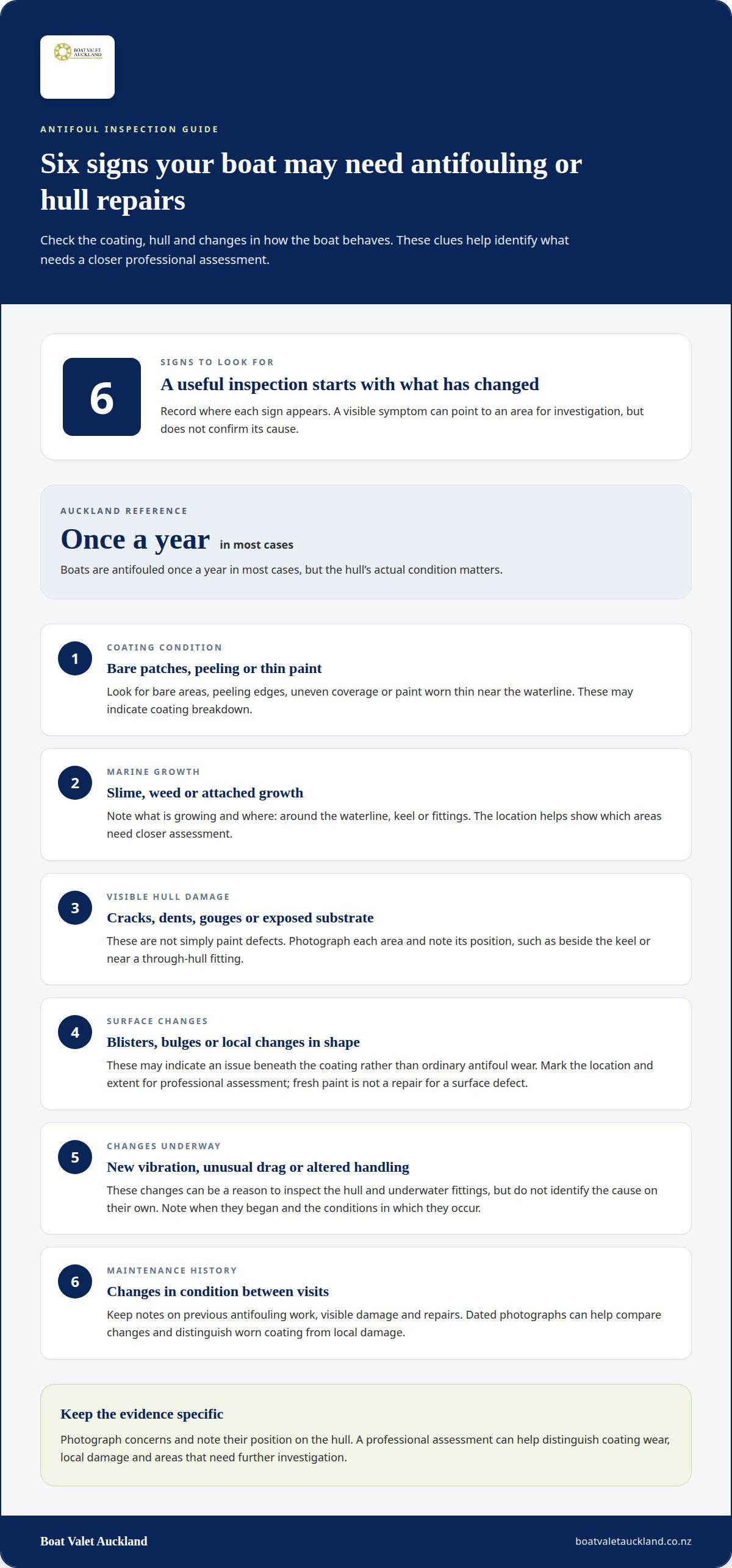
What are the signs that a boat needs antifouling or hull repairs?
Compare the coating across the underwater hull. Look for bare patches, peeling edges, uneven coverage or paint worn thin near the waterline. These signs may indicate coating breakdown. In Auckland, boats are antifouled once a year in most cases, but the hull’s actual condition matters.
Note marine growth and where it appears. Slime, weed or attached growth on the hull can indicate that the coating needs attention. Record whether growth is concentrated around the waterline, keel or fittings. This helps identify areas that need closer assessment.
Distinguish coating wear from visible hull damage. Cracks, dents, deep gouges or exposed substrate are not simply paint defects. Photograph each area and note its position, such as beside the keel or near a through-hull fitting. Clear examples help define what needs investigation before recoating.
Look for blistering, bulges or local changes in the hull surface. These may indicate a problem beneath the coating rather than ordinary antifoul wear. Mark the location and extent for professional assessment. Fresh paint is not a repair for a surface defect.
Pay attention to changes noticed while using the boat. New vibration, unusual drag or a change in handling can be reasons to inspect the hull and underwater fittings. These symptoms do not identify a cause on their own. Note when they began and whether they occur under particular conditions.
Keep a record of the coating’s condition between maintenance visits. Note previous antifouling work, visible damage and repairs, using dated photographs where available. This makes changes easier to compare and helps an inspection distinguish worn coating, local damage and areas needing further assessment.
What information should I provide when booking an antifoul inspection?
Give the vessel’s name and type, and include its make and model if known. A launch, yacht and trailer boat can have different hull shapes and access needs. These details help define the inspection’s starting scope.
Share the boat’s approximate size and hull material. Note whether the hull is fibreglass, timber or metal, if known. This helps the assessor understand the surface and plan an appropriate inspection approach.
Provide the vessel’s Auckland location, including the marina, berth or other access point. Add practical access instructions, such as a gate or berth reference. Clear directions help the professional plan the visit.
Describe why you are booking. Mention visible growth, worn coating, peeling paint or suspected hull damage. If the boat’s performance has changed, explain what changed and when you noticed it. Specific observations help focus the assessment.
Summarise previous antifouling work. Include the last known maintenance date, coating type or product name, if available. Note any areas repaired or recoated separately. This history helps distinguish recent surface changes from older coating layers.
Send clear photographs where possible. Include a wide view of the hull and close-ups of specific concerns, such as a bare patch or damaged edge. Identify where each image was taken. Photos give the assessor useful context before arrival.
Explain the access available. State whether the boat is afloat or already ashore, and mention any restrictions affecting inspection. If you know a haul-out is planned, include its timing. Access affects which hull areas can be seen.
Bring together these details before arranging the visit. A concise message with vessel information, location, maintenance history and photographs gives the inspection a clear starting point. To discuss your boat’s antifoul needs, book an antifoul inspection.
Auckland mooring owners should choose a provider from the approved mooring service provider list. Include this when sharing the vessel’s location and access details.
Boat Valet Auckland: Antifouling
Boat Valet Auckland’s antifouling service can help when an inspection identifies worn coating that needs renewal. It is a practical next step when the coating needs attention, rather than when the hull first needs a separate repair assessment.
Share the vessel’s location, hull details, coating history and visible concerns. Clear photographs of peeling, bare patches or marine growth help explain what you have noticed. The hull’s condition and preparation needs determine the work, so the approach can suit the boat rather than assume every surface is the same.
For a straightforward next step, contact Boat Valet Auckland to discuss antifouling for your boat.
Plan your boat’s next maintenance step
Use the inspection findings to decide what needs attention now and what can be planned for later. A clear record of the hull’s condition can also support more informed maintenance decisions over time. If the assessment points to coating wear, an antifoul inspection service in Auckland can lead to planned antifouling work. Boat Valet Auckland also offers Boat Cut and Polish and Teak Restoration for other care needs.
Share the inspection observations and your priorities when discussing the next step. That keeps the conversation focused on your vessel and the work it needs, rather than a standard package. Contact Boat Valet Auckland to discuss the right way forward for your boat.
Frequently Asked Questions
How long does the job take?
The time depends on the inspection scope, hull access and surface condition. A boat already ashore allows direct access to its underwater surfaces, while an afloat assessment has different limits. Preparation or antifoul application adds work beyond assessing the coating. Share the vessel’s location, access arrangements and concerns when booking so the work can be planned around the actual task.
What does an antifoul inspection service in Auckland include?
An antifoul inspection service in Auckland assesses the coating’s condition and identifies areas needing attention. The professional considers the existing surface, visible wear and concerns you report. An inspection is an assessment, not automatically a full repaint or hull repair. Its findings help determine whether the next step is coating maintenance, further surface preparation or separate investigation of damage.
Which Auckland marine services inspect antifouling and hull condition?
Boat Valet Auckland provides antifouling for boat owners in Auckland. Its mobile service visits marinas and private properties across the greater Auckland region. An antifouling assessment focuses on the coating and its maintenance needs. Suspected structural damage is a separate concern: coating work should not be treated as a substitute for assessing a damaged hull.
How often should antifouling be inspected in Auckland waters?
Inspect the coating in line with its condition and the vessel’s use, rather than relying on a fixed inspection interval. In Auckland waters, boats are antifouled once a year in most cases. Recoating frequency can range from 1 to 5 years, depending on the coating system and vessel storage and usage conditions. An inspection helps inform that decision.
How do Auckland antifoul inspection services compare?
Compare services by their inspection scope: whether they can assess the underwater hull directly, whether a haul-out is needed, and how they document coating wear, damage and preparation requirements. The right scope depends on the hull’s condition and the concerns you report.
Comments