
Boat window treatments that repel water and sea spray

Rain and sea spray don’t have to cling to your boat’s glass. A boat window treatment for water repellency helps droplets bead and run off, supporting clearer visibility in wet conditions. For the coating to work as intended, the glass must be clean and dry before application, then left to cure.
A quick wipe can seem enough when spray keeps returning, but a water-repellent treatment does more than clean the surface: it applies a coating that helps water move off the glass. Preparation and even coverage matter, so treat every windscreen panel consistently.
Here, you’ll learn how the process works, what to consider when choosing a treatment, and how to apply it carefully. We’ll cover cleaning, coating and curing, including the guidance to allow about an hour before using the boat. That gives you practical steps for deciding whether a treatment suits your boat and keeping its windows clearer in wet weather.
Table of Contents
Boat window treatment for water repellency
A boat window treatment for water repellency uses a coating that encourages rain and sea-spray droplets to bead and run off the glass. This can support clearer visibility in wet conditions, particularly on a windscreen exposed to spray. It doesn’t replace cleaning: remove dirt, salt and oily marks before treatment. The coating is a finishing step for clean glass, not a way to hide grime or restore damaged glazing.
The key is an even coating on a properly prepared surface. Residue can stop the treatment bonding consistently, leaving patches that behave differently when wet. If your boat has a multi-panel windscreen, treat each panel across its full surface; coating only the centre pane leaves adjacent sections untreated. Clean glass also makes it easier to see whether water beads and runs off after application.
Choose a treatment suited to the glass
Choose a product intended for sealing or adding water repellency to boat windscreen glass. Read its directions first, as application and curing instructions vary. A dedicated coating is one option; a two-in-one glass cleaner and sealer combines cleaning and sealing. Choose according to the product directions and the condition of the glass. Neither option removes the need to prepare the surface as directed.
Consider your windscreen layout, too. A single pane is straightforward to cover evenly. A multi-panel windscreen has more edges and joins, so plan to treat every glass section across its full surface. Check the product instructions for suitable glazing and application conditions. Don’t assume a product made for another surface is suitable for boat glass.
Prepare and apply the coating
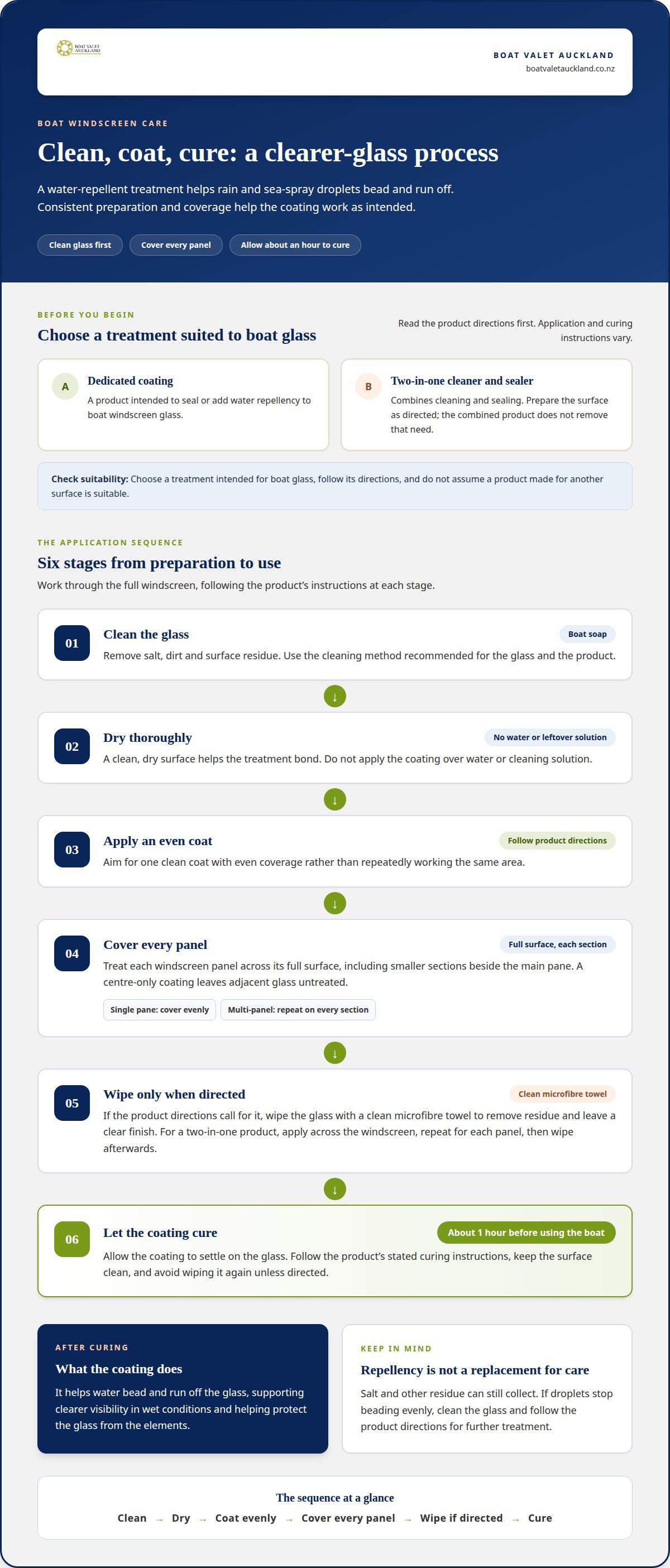
Work through the following sequence for a more consistent finish:
Clean the windscreen with boat soap to remove salt, dirt and surface residue. Use the cleaning method recommended for the glass and product.
Dry the glass thoroughly. A clean, dry surface helps the treatment bond, so don’t apply the coating over water or leftover cleaning solution.
Apply the treatment as directed. Aim for one clean coat with even coverage rather than repeatedly working the same area.
Cover the entire surface of each windscreen panel. Follow the same process across every panel, including smaller sections beside the main pane.
Wipe the glass with a clean microfibre towel when the product directions call for it. This helps remove residue and leave a clear finish.
Some products combine cleaning and sealing. For this two-in-one approach, apply the product across the entire windscreen, then repeat for each panel. Wipe the glass with a clean microfibre towel afterwards. Don’t skip a panel because it faces away from the prevailing spray: water can reach different parts of the windscreen as the boat moves or changes direction.
Allow the coating to cure before using the boat. A boat windscreen treatment should be left for about an hour before the boat is used. That interval gives the coating time to settle on the glass. Check the product directions as well, since its stated curing instructions should guide your application. Keep the surface clean during this period, and avoid wiping it again unless the directions specify that step.
Once cured, the coating helps water bead and run off, supporting a clearer view in wet conditions. It also helps protect the glass from the elements. Water repellency doesn’t replace cleaning or maintenance: salt and other residue can still collect on the surface. If droplets stop beading evenly, clean the glass and follow the product directions for further treatment. Use a clean microfibre towel to avoid transferring dirt back onto the glass.
Use a clean microfibre towel to wipe the glass after applying a glass-cleaning and sealing product, if its directions call for it. A water-repellent coating makes droplets bead and run off the boat windscreen, helping visibility in wet conditions. Clean and dry the surface before applying the coating so it can bond properly. Use boat soap to clean the windscreen before applying a glass-sealing product. Apply an even coat, then let it cure for about an hour before using the boat.
Boat Valet Auckland: Window Polishing
Boat Valet Auckland offers Window Polishing for boat owners whose glass needs attention beyond routine cleaning. Water-repellent coating helps water bead and run off, while polishing addresses the condition and finish of the glass. They serve different purposes, so polishing may be the more relevant next step if persistent marks or a dulled appearance remain after cleaning.
If salt residue is gone but the glass still looks marked, window polishing may be more relevant than applying another coating. The right approach depends on the condition of the glass and the result you want. Boat Valet Auckland can discuss Window Polishing alongside other suitable boat-care work, including Boat Cut and Polish.
Contact Boat Valet Auckland to discuss Window Polishing for your boat.
Plan your next step for clearer windows
Make window care part of your boat’s wider maintenance plan. A boat window treatment for water repellency can support visibility in wet conditions, while the glass’s overall condition helps determine whether polishing is also worth considering. Choose a treatment to address what you can see, rather than adding products without a clear purpose.
For other upkeep, Boat Valet Auckland also offers Boat Cut and Polish, Antifouling and Teak Restoration. Each service addresses a different part of boat care. Contact Steve to discuss what suits your vessel and priorities.
Ready to plan your boat’s care? Contact Boat Valet Auckland to discuss the right next step, and move ahead with confidence.
Comments