
Cleaning and Polishing Rocket Launchers with Aluminium Polish

Aluminium polish isn’t always the right first step: on a gold-anodised rocket launcher, an unsuitable cleaner can remove the coloured finish. Cleaning and polishing rocket launchers starts with identifying whether the aluminium is bare or anodised, then choosing a method that suits that surface.
It’s tempting to reach for a strong cleaner when salt, grime or exhaust residue dulls metal. But a product that works on bare aluminium may alter an anodised finish. Oven cleaner has been reported to strip gold anodising, so use particular care rather than assuming it’s a safe shortcut.
This guide explains how to choose an aluminium cleaner or polish, what to consider before using a rotary tool, and how to approach gold-anodised launchers without confusing cleaning with stripping the finish. You’ll also learn when cautious cleaning is the better option and when polishing bare aluminium may suit the result you want.
Table of Contents
Aluminium cleaners and polishes
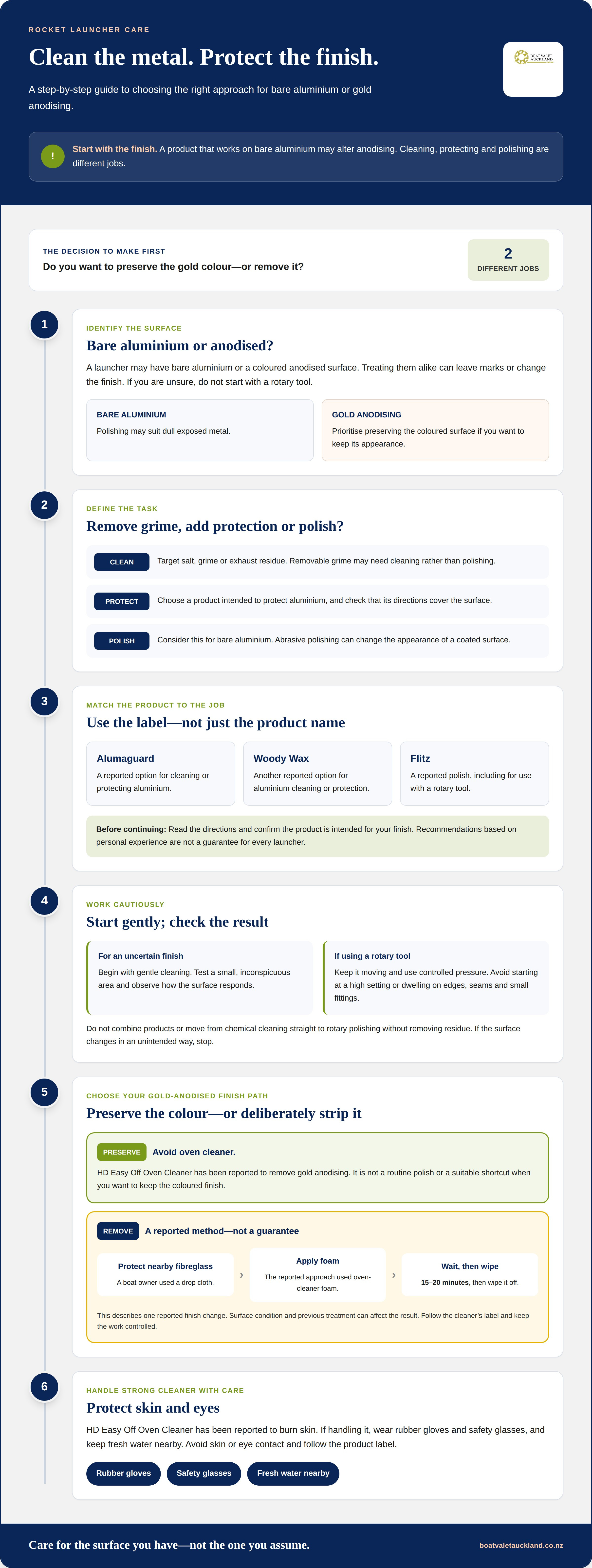
Identify the finish before choosing an aluminium product. A launcher may have bare aluminium or a coloured anodised surface, and each needs different treatment. A cleaner removes deposits, while a polish works on the metal’s surface. A protective product has another purpose. Treating these jobs as interchangeable can leave marks or alter the finish. First decide whether you need to remove grime, add protection or polish exposed aluminium.
Alumaguard and Woody Wax have both been recommended for cleaning or protecting aluminium. These are options to consider, not a reason to skip the product directions. Read the label and check that its intended use matches the launcher’s finish. If it doesn’t cover that surface, choose a more suitable approach. Don’t assume a product suited to one aluminium fitting will work on every launcher or finish.
Flitz polish has been recommended for cleaning and polishing, including with a rotary tool. A rotary tool changes how quickly and firmly you work the surface. It can make polishing more efficient, but concentrates contact in a small area. Keep the tool moving and apply controlled pressure. Don’t start at a high setting or dwell on edges, seams or small fittings. These areas can receive more attention than broad, flat surfaces.
Choose the method based on the aluminium’s condition, not simply the product name. A launcher with removable grime may need cleaning rather than polishing. Dull bare metal may call for polish. A coated surface needs more caution, because abrasive polishing can change its appearance. Distinguish products by their purpose:
Alumaguard: a reported option for cleaning or protecting aluminium.
Woody Wax: another reported option for aluminium cleaning or protection.
Flitz: a reported polish, including in rotary-tool use.
These recommendations don’t mean every product suits every launcher. Both the surface condition and finish matter. If you’re unsure whether the metal is bare or coated, don’t start with a rotary tool. Begin with gentle cleaning and observe how the surface responds. Keep the product off adjacent materials unless its instructions allow contact. This limits unnecessary abrasion and helps distinguish dirt from a change in the metal’s finish.
Take care with strong cleaners. HD Easy Off Oven Cleaner has been reported to burn skin. If handling it, wear rubber gloves and safety glasses, and keep fresh water nearby. It isn’t a routine aluminium polish. One report describes it removing gold anodising from boat rocket launchers, making it an especially unsuitable choice if you want to preserve a coloured surface.
A measured sequence makes the decision clearer: identify the finish, remove loose grime, then select a compatible cleaner or polish. Follow the directions for Alumaguard, Woody Wax or Flitz rather than combining products. Don’t mix cleaners or move from chemical cleaning straight to rotary polishing without removing residue. Polishing may suit bare aluminium. For gold anodising, preserving the colour takes priority over pursuing a bright bare-metal shine. That distinction is central to cleaning and polishing rocket launchers without treating every surface alike.
A forum member said Alumaguard and Woody Wax worked well for cleaning or protecting aluminium, and recommended Flitz polish with a rotary tool for cleaning and polishing. Treat this as personal experience to weigh alongside the product label, not a guarantee for a particular launcher. The recommendation doesn’t remove the need to identify the finish or decide whether the task is cleaning, protection or polishing. Use each product for its stated purpose, and don’t combine treatments simply because they’re all intended for aluminium.
For a cautious approach, test a small, inconspicuous area and check the result before continuing. If the surface changes in a way you didn’t intend, stop rather than applying more product or increasing pressure. Wipe away residue as directed on the label, and work carefully around edges and adjoining materials. With a rotary tool, use only the contact needed for the task; hand application is a sensible alternative when the finish is uncertain. For strong cleaners, follow the handling precautions already noted and avoid skin or eye contact. If you can’t confirm that a product suits the finish, leave polishing aside and choose a gentler cleaning method. Careful product selection and restrained application help prevent routine care from damaging the aluminium or its coating.
Cleaning gold-anodised rocket launchers
Gold anodising gives aluminium a coloured surface that polishing can alter. First decide whether you want to preserve that finish or remove it. Those are different jobs. Routine cleaning should target dirt while leaving the gold appearance intact. Deliberately removing anodising exposes a different surface, which may then be polished. Don’t treat aluminium polish as a way to clean anodised metal without changing its appearance.
If you want to keep the gold finish, avoid oven cleaner. A boat owner reported that HD Easy Off Oven Cleaner removed the gold anodising from rocket launchers, then polished the aluminium. This makes the distinction clear: the cleaner was used to strip the coating, not preserve it. If the gold colour matters, don’t use this approach for routine maintenance.
Removing anodising is a deliberate finish change. A forum member described applying oven-cleaner foam, leaving it for 15-20 minutes, then wiping it off. The same owner covered nearby fibreglass with a drop cloth before starting. Those details describe a reported method, not a guarantee that every launcher will respond identically. The surface condition and previous treatment can affect the result.
If you’re considering changing the finish, plan the work around nearby boat surfaces. In one report, a drop cloth protected fibreglass from the foam. Keep the work area controlled and avoid spreading product beyond the aluminium being treated. Follow the cleaner’s label and the safety precautions discussed earlier. The purpose is to remove the coloured layer, so stop if preserving the gold finish is still important.
Once the coating is removed, the exposed aluminium can be polished. The owner in the report used aluminium polish after stripping the anodising. Treat this as a separate stage: first remove the coating, then polish the exposed metal. Don’t assume polish alone will remove anodising evenly. A rotary tool concentrates contact, so controlled movement matters around launcher edges and fittings.
Before choosing between cleaning and stripping, use this simple decision:
Keep the gold appearance: clean without using a reported anodising stripper.
Change to a bare-aluminium finish: recognise that removing anodising changes the surface.
Polish after removal: treat polishing as a follow-up step, not as the stripping method.
The choice also affects what counts as success. For preservation, success means removing grime without losing the gold colour. For stripping, success means removing the coloured layer before polishing the aluminium beneath. Combining these goals can lead to disappointment: the reported method for removing anodising directly conflicts with keeping it intact.
Take care around nearby surfaces. The owner in the report used a drop cloth over fibreglass, a practical way to separate the launcher from surrounding boat materials. Wipe away residue as directed by the product label, and keep the work focused on the intended area. Don’t use polishing to hide uneven stripping. It can change the exposed metal’s appearance, but it cannot restore removed anodising.
For boat upkeep beyond launcher finishes, engine-room cleaning addresses a separate area where deposits can collect. Keep that work distinct from stripping or polishing gold-anodised fittings.
For routine cleaning, success means removing dirt while leaving the gold appearance undisturbed. For a finish change, success means accepting that the coloured surface is gone and treating the exposed metal as the polishing surface. Keeping these aims separate makes each step easier to judge: a clean-looking launcher doesn’t necessarily mean its original finish has been preserved. Choose the intended outcome before applying a product, and don’t let the later polishing stage obscure whether the coating was meant to remain.
A forum member reported that HD Easy Off Oven Cleaner removed the gold anodising from his boat’s rocket launchers, after which he polished them with aluminium polish. He also said he covered the fibreglass with a drop cloth while stripping the anodising. These are reports of one person’s experience, not a promise of a uniform result. They reinforce the need to separate coating removal from routine care and to protect nearby fibreglass during the reported process. If the gold is to remain, stripping and polishing aren’t the desired maintenance result. If you want a changed finish, treat removal and polishing as separate stages, and keep the work confined to the intended launcher surfaces.
Boat Valet Auckland: Boat Cut and Polish
Boat Valet Auckland’s Boat Cut and Polish is a natural next step when the wider boat exterior needs attention alongside launcher care. It focuses on the boat’s finish, rather than stripping anodising from a specific fitting. Keeping those jobs separate helps protect gold-coloured surfaces while addressing dullness elsewhere on the hull.
Choose Boat Valet Auckland’s Boat Cut and Polish when your boat’s exterior needs a broader refresh, not just spot cleaning around rocket launchers. For wider maintenance, Antifouling and Teak Restoration address different areas of the boat. The right work depends on which surfaces need care and which finish you want to maintain.
For a practical next step, contact Boat Valet Auckland to discuss Boat Cut and Polish for your boat.
Plan the next stage of boat care
Include the launcher’s finish in your wider boat-care plan. Before cleaning and polishing rocket launchers, decide what appearance you want to preserve and how the surrounding surfaces should look alongside it. A well-kept fitting can still feel out of place if the rest of the exterior needs attention.
Boat Valet Auckland provides Boat Cut and Polish for broader exterior care, alongside Antifouling and Teak Restoration for other areas of the boat. Choose work that suits your vessel’s current needs rather than treating every surface the same way. For mobile boat care across Auckland, get in touch for a free, no-obligation consultation and quote.
To discuss the next step for your boat, contact Boat Valet Auckland. Take it one surface at a time and keep your boat looking cared for.
Comments