
How to Justify Boat Cleaning Costs by Size and Condition

Updated: Oct 31
A boat-cleaning quote isn’t based on length alone. To understand how to justify professional boat cleaning costs, compare the work required with your boat’s size, condition, fittings and cleaning frequency. A larger vessel, built-up grime or detailed surfaces can all require more time and care.
It’s reasonable to ask what a quote covers, especially when routine cleaning can seem like a job you could handle yourself. Value comes from matching the work to your boat’s needs and keeping its surfaces in good condition, rather than paying for services it doesn’t require.
This guide explains how size, age and onboard features affect the work involved, why regular cleaning can be better value than letting grime build up, and how professional care compares with DIY. You’ll have a practical way to assess what a cleaning quote covers and decide which approach makes sense for your boat.
Table of Contents
Boat size, age, and equipment as cost drivers
A compact runabout and a broad-beamed cruiser have different cleaning needs. Surface area, condition and access all help explain why the work, and its cost, can vary.
Boat size and cleaning costs
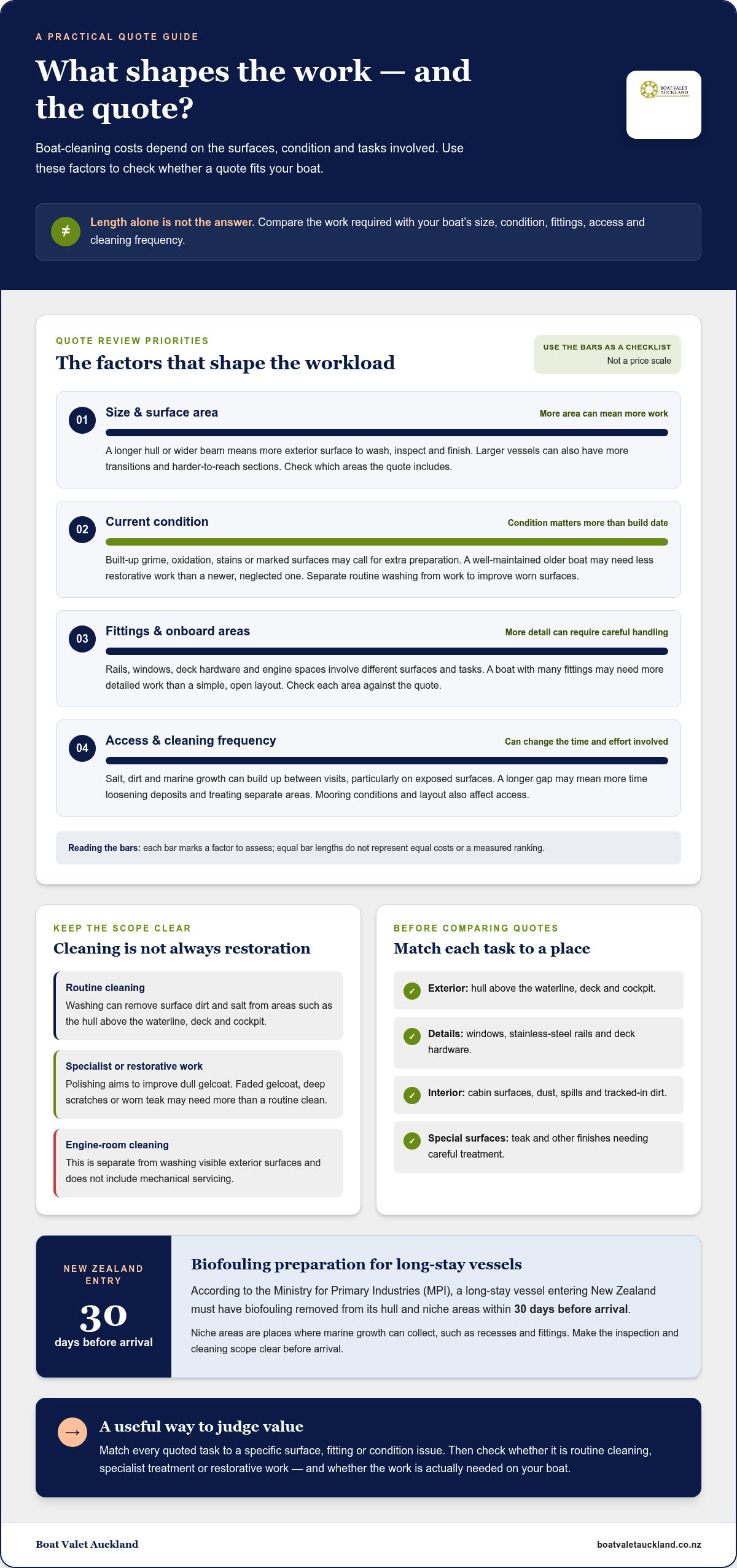
Boat size affects how much hull and exterior surface needs attention. A longer hull or wider beam means more area to wash, inspect and finish. A larger yacht may also have more surface transitions and hard-to-reach sections than a small runabout. When reviewing a quote, check which areas are included instead of relying on length alone.
Equipment and cleaning costs
Fittings and onboard areas add surfaces that need careful cleaning. Stainless-steel rails, windows, deck hardware and an engine room each require different handling. A boat with many fittings may need more detailed work than a simple, open layout. Note the equipment and areas involved, then compare them with the tasks in the quote.
Age and condition
Age can affect cleaning needs when grime, oxidation or stains have accumulated, but the boat’s current condition matters more than its build date. An older vessel that has been well maintained may need less restorative work than a newer boat with neglected surfaces. Ask what preparation the visible condition requires, and distinguish routine washing from work to improve worn or marked surfaces.
Access and cleaning frequency also shape the workload. Salt, dirt and marine growth can build up between visits, particularly on exposed surfaces. A regularly maintained boat may need a straightforward clean, while a longer gap can mean more time loosening deposits and treating separate areas. Mooring conditions and layout help explain why similar-sized boats may need different levels of work.
New Zealand entry requirements can also affect hull preparation. For a long-stay vessel entering New Zealand, biofouling must be removed from the hull and niche areas within 30 days before arrival, according to the Ministry for Primary Industries (MPI). Niche areas include places where marine growth can collect, such as recesses and fittings. That requirement makes a clear inspection and cleaning scope especially important before arrival, where specialist marine contractors such as BLACK PEARL MARINES often employ hydroblasting to tackle heavy marine growth.
For your boat, the price depends on its size, condition, equipment, access and required cleaning tasks. An exact figure is provided in a quote for your case.
To judge value, match each quoted task to a specific surface, fitting or condition issue. This makes the scope easier to understand and helps distinguish useful detailing from work your boat doesn’t need.
What is included in a professional boat cleaning service?
Professional cleaning is a defined set of tasks for particular surfaces and areas, not simply a wash of the whole vessel. To assess its value, match each task to your boat’s condition and the result you want, such as removing salt from exterior surfaces or refreshing the interior.
A cleaning scope can cover several distinct parts of a boat. Each surface needs suitable handling, so a thorough service distinguishes general cleaning from specialised restoration or polishing. Washing a deck removes surface dirt, while polishing aims to improve the appearance of dull gelcoat. These are different jobs, with different preparation and effort.
Exterior surfaces: Washing the hull above the waterline, deck and cockpit removes salt, grime and everyday residue.
Windows and fittings: Cleaning glass and stainless-steel details addresses marks that a general wash can leave behind.
Interior areas: Vacuuming and wiping cabin surfaces tackles dust, spills and tracked-in dirt.
Special surfaces: Teak and other finishes need careful cleaning to avoid treating them like standard gelcoat.
Engine spaces: Cleaning the engine room is a separate task from washing visible exterior surfaces.
Preparation matters. A clear scope identifies the areas to be cleaned, the visible issues being addressed and any surfaces needing special care. If your boat has stained upholstery, marked windows and salt-covered rails, list them separately. This helps show exactly what the work covers and avoids confusion about what “cleaning” means.
Cleaning has limits. Washing can remove dirt and salt, but it won’t necessarily correct faded gelcoat, deep scratches or worn teak. These conditions may call for restorative work rather than routine cleaning. An engine-room clean is also separate from mechanical servicing. Distinguishing the tasks helps you compare the proposed work with your boat’s needs.
Before agreeing to a scope, walk through your boat and note the areas that matter most. A regularly used cabin may need interior attention, while a boat kept outdoors may need more focus on exterior surfaces and fittings. This list gives you a practical basis for discussing priorities and assessing what the work includes.
If the engine space is part of your cleaning priorities, explore professional boat cleaning services as a way to understand the relevant care options.
An engine-room clean is distinct from mechanical servicing: including the space in a cleaning scope does not include mechanical work. Clarifying the difference sets expectations about what the cleaning covers. If you need mechanical work, arrange it separately.
How do professional boat cleaning costs compare with DIY cleaning costs?
DIY cleaning can suit routine jobs, such as rinsing salt from a small cockpit after use. Professional cleaning may be more useful when a task needs specialised equipment, careful surface treatment or sustained effort. Compare the full workload, not just the cleaning products. Your time, preparation and the finish all count.
For a fair comparison, list the work required and the resources each approach uses. A DIY wash may mean gathering suitable brushes, cloths and cleaning products, then reaching every surface. A professional service brings the labour and process together. The value depends on how much work your boat needs and the result you expect.
Time: Include preparation, cleaning, rinsing and putting equipment away. A full cabin clean takes longer than wiping a small table.
Materials: Consider the products and tools needed for glass, upholstery, gelcoat or teak, rather than assuming one cleaner suits every surface.
Access: Note awkward areas, such as narrow gaps behind deck fittings or confined engine spaces.
Finish: Decide whether a basic wash meets your needs or the boat needs more detailed attention.
DIY is often practical for familiar, accessible tasks. You might rinse the deck and wipe down the cockpit after a day on the water, for example. This gives you control over timing and lets you handle light maintenance as part of regular boat care. It may be less suitable for neglected surfaces or work across a large area.
Professional cleaning can make sense when the work is detailed or time-consuming. Consider a boat with salt-marked windows, stained teak and grime around hard-to-reach fittings. Each surface needs appropriate care, and a general-purpose wash may not deliver the finish you want. A clear professional scope shows which tasks are included and where the work is focused.
Compare like with like. List the same surfaces and desired finish for both options, then include your time and any supplies in the DIY calculation. Separate routine washing from restorative work: polishing faded gelcoat is not the same as rinsing a deck. This helps you decide whether professional input adds practical value for the job.
Choose the approach that fits your skills, available time and boat condition. For a clear next step, arrange professional boat cleaning for the surfaces that need attention.
Boat Valet Auckland: Boat Cut and Polish
Boat Valet Auckland provides Boat Cut and Polish for owners whose exterior finish looks dull or needs more than a routine wash. It’s a practical option when the surface condition, rather than general dirt, is why you’re seeking professional care. A clear scope connects the work to your boat’s actual needs.
Choose a service that matches the job. Antifouling addresses the hull’s coating needs, while Teak Restoration focuses on teak surfaces. For cabin interiors, Interior Valet targets the areas needing attention. Keeping these tasks distinct makes it easier to identify the relevant work and the result you want.
Contact Boat Valet Auckland for a free, no-obligation quote and discuss which service fits your boat’s condition and priorities.
Make your next maintenance decision with confidence
A useful next step is to turn your observations into clear maintenance priorities. Decide what you want to address first, whether that’s improving the exterior finish, caring for the hull coating or refreshing teak. This gives your conversation a practical focus and connects the work you request to your boat’s condition.
Boat Valet Auckland provides Boat Cut and Polish, Antifouling and Teak Restoration across Auckland. Share which areas need attention and the result you’re aiming for. That makes it easier to discuss a suitable scope and apply what you’ve learned about how to justify professional boat cleaning costs to your own vessel.
Contact Boat Valet Auckland to talk through your boat’s maintenance priorities and take the next step with confidence.
Frequently Asked Questions
What factors affect professional boat cleaning prices in NZ?
Boat size, condition, scope, location and your preferences all affect the quote. A practical way to justify professional boat cleaning costs is to compare the listed tasks with the areas needing attention. An exterior wash, for example, differs from polishing or teak care. For Auckland boats, location is also considered when preparing a quote for the work you choose.
How do boat cleaning costs differ by boat size, type, and condition?
Costs vary because boats have different layouts, surfaces and access needs. A simple open trailer boat, for example, has a different cleaning scope from a cabin launch with interior spaces, windows and enclosed areas. Condition also changes the work: routine dirt is different from ingrained marks or oxidised gelcoat. Compare the specific surfaces and tasks involved, rather than relying on boat type alone.
What are the benefits of professional boat cleaning for maintenance and resale value?
Professional cleaning helps keep a boat presentable and makes it easier to notice changes in its surfaces during routine care. Before a sale, a tidy cockpit, clean windows and well-cared-for teak can improve presentation in photographs and viewings. Boat Valet Auckland offers Pre-Sale Grooming for owners preparing to sell. Cleaning supports presentation, while buyers still assess the vessel’s overall condition.
Comments