
When to Replace Antifouling Paint: Coverage, Wear and Timing

In New Zealand, antifouling paint generally lasts one to two years. Knowing when to replace antifouling paint means looking beyond the calendar: the coating’s condition, the paint type and how the boat is used all matter.
It’s reasonable to want a clear service interval, but no single schedule suits every hull. Marine growth appearing sooner than usual, or thin, patchy paint that exposes the primer or gelcoat, can signal that renewal is due earlier.
This guide explains how often to plan antifouling, which signs call for an earlier inspection, and how coating coverage and paint type affect the interval. You’ll also see how time afloat and boat use can change the timing, so you can plan maintenance around the hull’s condition rather than relying on a date alone.
Table of Contents
How often should a professional antifoul my boat?
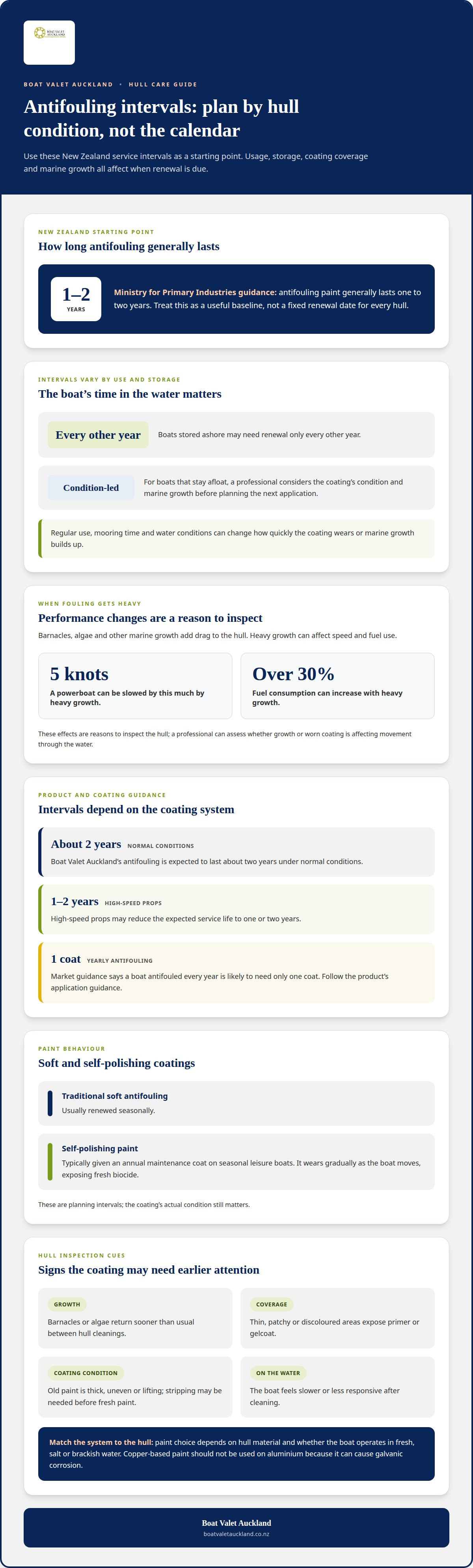
For New Zealand boats, the Ministry for Primary Industries says antifouling paint generally lasts one to two years. The right interval also depends on mooring, use, water conditions and coating choice.
Reapplication intervals by use and storage
An antifouling interval is the time between professional applications, adjusted for the boat’s use and storage. The Ministry for Primary Industries’ one-to-two-year guidance gives a useful New Zealand starting point, not a fixed date for every hull.
A boat kept afloat and used regularly faces different conditions from one stored ashore and washed down. Boats stored ashore may need renewal only every other year. For a boat that stays in the water, a professional considers the coating’s condition and marine growth before planning the next application. That assessment helps answer when to replace antifouling paint without relying on the calendar alone.
Marine growth, performance and fuel use
Fouling is the accumulation of marine organisms on the hull’s bottom. Barnacles, algae and other growth increase drag, which can reduce speed and affect fuel use.
Heavy growth can slow a powerboat by 5 knots and increase fuel consumption by over 30%. Those effects make a change in performance a reason to inspect the hull, rather than simply waiting for the usual renewal date. A professional can assess whether growth or worn coverage is affecting the boat’s movement through the water.
Water conditions and coating life
Water conditions and boat use affect how quickly an antifouling coating wears and how much marine growth builds up. The right paint also depends on hull material, hull type and whether the boat operates in fresh, salt or brackish water.
A professional considers these conditions alongside how often the boat moves and how long it remains moored. Copper-based paint, for example, should not be used on aluminium because it can cause galvanic corrosion. Matching the coating to the hull and operating conditions helps avoid an unsuitable system and supports a practical renewal plan.
New Zealand’s clean-hull requirements apply to arriving vessels, including yachts, but they are separate from routine paint removal and disposal. Removed coating can contain copper and biocides, so managing dust and residue matters for people and the marine environment. Paint handling can expose skin, eyes and breathing to coating or dust; professional protective equipment includes gloves, goggles, a breathing mask and overalls.
Antifouling application costs in New Zealand depend on the hull’s size and condition, preparation needed and paint system; the price is given after a quote request. These factors also shape the professional’s coating choice and application plan.
Signs that antifouling needs earlier renewal
Marine growth appearing sooner between hull cleanings can signal that the coating is losing effectiveness. Barnacles, algae and other organisms on the surface are visible clues. A professional assessment can distinguish new fouling from a coating that has reached the end of its service life.
Check the coating’s coverage across the hull. Discolouration, bare patches or thin areas that expose primer or gelcoat can indicate that renewal is due. These signs matter because an uneven coating leaves parts of the hull less protected, even if other areas still look sound.
Stripping may be needed when old antifouling has built up into a thick, uneven layer or is lifting from the surface. Applying fresh paint over loose material can leave a poor base for the new coating. A professional considers the existing paint’s condition and the hull material before deciding how much removal and preparation the job needs.
Buying a used boat is a good time to assess the coating, especially if its application history is unclear. Before launching, an inspection can reveal patchy coverage, exposed primer or growth that warrants renewal. Base the decision on the hull’s condition and intended use, not the purchase or launch date alone.
Changes on the water can provide another clue. If barnacles or algae return more often after cleaning, or the boat feels slower and less responsive, arrange a hull inspection. These symptoms can indicate fouling, but the paint’s condition and coverage help determine whether reapplication is appropriate.
For a professional assessment, arrange an antifouling inspection before the next launch or after spotting uneven coverage. A close look at the hull surface helps identify whether it needs cleaning, a fresh coat or removal of worn material first.
Product-specific coating coverage and service intervals
Antifouling intervals vary by coating system, application coverage and the product’s instructions. The label and the hull’s condition help set a realistic renewal plan.
Coverage and service intervals by product
Coverage describes how consistently a coating protects the hull, while its service interval is the time before maintenance or renewal. Both matter because a product’s stated lifespan assumes it has been applied as directed.
Antifouling paint lifespan varies by system and conditions. Boat Valet Auckland’s antifouling is expected to last about two years under normal conditions, though high-speed props may reduce this to one or two years. Follow the product instructions and assess the hull’s condition rather than assuming every paint has the same lifespan.
Coverage also matters across the whole hull. A thin or missed area can lose protection sooner than a well-coated surface, so the product’s application guidance informs the work and later assessment. A boat antifouled every year is likely to need only 1 coat, according to the market guidance. The coating system and its specified coverage remain the basis for deciding.
Renewal intervals for soft and self-polishing paint
Traditional soft antifouling is usually renewed seasonally, while self-polishing paint is typically given an annual maintenance coat on seasonal leisure boats. These intervals help owners plan, but the coating’s actual condition still matters.
A self-polishing coating wears gradually as the boat moves through the water, exposing fresh biocide. Other coatings follow their own product instructions, so their renewal plans shouldn’t automatically be treated as interchangeable. A professional considers the specified maintenance interval and visible wear before recommending work.
Hard antifouling behaves differently: it remains as a hard shell rather than wearing away. It is commonly sanded annually or every two years to control build-up, depending on its condition and product instructions. That maintenance interval isn’t the same as an automatic full replacement. Assessing the existing coating helps determine whether it needs maintenance or renewal.
Antifouling types and their service characteristics
Antifouling systems differ in how they protect the hull and respond to movement through the water. Professionals assess the boat’s hull material, use and existing coating before recommending a system. The distinction matters because a paint designed for a frequently used powerboat may not suit every hull or pattern of use.
Ablative antifouling wears away gradually, exposing a fresh layer of biocide as the coating erodes. This helps explain why the coating’s condition and the boat’s use both matter when planning maintenance. Regular hull inspections let professionals assess whether the paint is wearing as intended or showing uneven loss before the next season.
Hard antifouling works differently: it remains as a hard shell instead of wearing away. It is better suited to boats that move fast or are used frequently, according to the available market guidance. Its coating can build up over time, so professionals consider its condition and product instructions when planning maintenance.
Paint chemistry must also suit the hull. Copper-based antifouling should not be used on aluminium because it can cause galvanic corrosion. Antifouling paints can contain copper and biocides to obstruct marine organisms, but that does not make every formulation suitable for every boat. Hull material is a key factor when selecting a system.
Water type is another selection factor. A boat operating in fresh, salt or brackish water needs a coating chosen for those conditions, alongside its hull type and use. Professionals assess these factors together rather than choosing paint by colour or applying the same system to every vessel.
Bring the coating history and details of how the boat is used to the assessment. That context helps professionals identify the existing system, assess wear and plan suitable antifouling for the hull. Arrange professional antifouling to discuss the coating that fits your boat and its use.
Boat Valet Auckland: Antifouling
Boat Valet Auckland provides mobile antifouling for owners who need professional hull coating renewal across Auckland. Turn to the service when paint is worn or patchy, or an inspection indicates that maintenance or earlier renewal is due.
The right approach depends on the existing coating, hull material, boat use and time spent afloat. Share what you know about the paint on the hull, where the boat is used and how it is moored. These details help guide the work and tailor the coating plan to your boat.
If your hull’s protection is due for attention, contact Boat Valet Auckland for a free, no-obligation consultation and quote.
Plan your next hull check with confidence
Make the next maintenance decision easier by keeping a clear record of the coating system, application date and any changes in the boat’s use or mooring. Share those details when arranging an assessment. They give the professional useful context to assess the hull’s condition and plan work around your boating schedule.
Knowing when to replace antifouling paint is one part of looking after your vessel. A planned maintenance visit can also be a chance to consider other visible areas that need attention. Alongside antifouling, Boat Valet Auckland offers Boat Cut and Polish and Teak Restoration.
If you’re ready to discuss the hull’s next maintenance step, contact Boat Valet Auckland today. A clear conversation is a practical place to start, and you can plan ahead with greater confidence.
Frequently Asked Questions
How often should a yacht be professionally antifouled?
In Auckland, antifouling is expected to last about two years under normal conditions, though high-speed props may reduce this to one or two years. For a yacht that stays afloat or is used regularly, an annual hull assessment can identify changes before they affect the next maintenance plan. The professional considers the coating’s condition, the yacht’s use and its mooring pattern rather than treating the interval as a fixed appointment date.
What’s the professional antifouling process?
A professional begins by assessing the hull, existing coating and material, then plans preparation and application to suit. Worn paint may need removal; the hull is prepared, masked at the waterline, washed to clear dust, and painted. Boat Valet Auckland applies antifouling by spray or roller. The coating and job requirements shape the final approach.
What signs show antifouling paint needs replacing?
Look for coating that has become thin, patchy or discoloured, especially where primer or gelcoat shows through. Barnacles or algae returning sooner after cleaning are another warning. For example, if a boat starts to feel sluggish after time afloat, growth may be adding drag. A hull assessment can help distinguish fouling from other causes and establish whether renewal is due.
How long does different types of antifouling paint last?
Service life depends on the coating system. Traditional soft antifouling is usually renewed seasonally, while self-polishing paint is typically given an annual maintenance coat on seasonal leisure boats. Some yacht foul-release systems are specified for three years. Hard antifouling remains as a shell and may need sanding annually or every two years to control build-up. Product instructions and coating condition guide maintenance.
How do boat use, storage, and water conditions affect antifouling paint lifespan?
Frequent use, long periods afloat and the water the boat operates in all influence coating wear and fouling. Paint selection also depends on hull material and type, as well as whether the water is fresh, salt or brackish. For example, a boat kept ashore and washed down has different exposure from one moored continuously, so its coating may follow a different maintenance pattern.
Can a professional apply new antifouling paint over existing paint, or must it be removed?
Existing paint doesn’t always need complete removal; the decision depends on its condition and the coating system’s instructions. Loose, worn or heavily built-up paint may need removal or preparation before fresh coating is applied. Boat Valet Auckland provides antifoul removal using garnet blasting or sanding, followed by sealing and reapplication where required. The hull’s material and existing coating inform the treatment.
Comments